
Attack on Titan arrived with explosive force and immediate impact. The series rejected comfort and predictability from its opening episode. Instead, it delivered relentless violence, emotional loss, and moral uncertainty. This approach immediately separated it from conventional anime narratives. As a result, it demanded attention rather than requesting it.

A War Narrative Rooted in Fear and Survival
At its core, the story presents humanity cornered by extinction. Titans represent overwhelming, uncontrollable terror. However, the real conflict quickly shifts inward. Fear evolves into desperation, then into ideological warfare. Consequently, survival becomes secondary to belief systems. This progression gives the series its brutal realism.
World-Building That Feels Claustrophobic and Real
The setting feels restrictive and suffocating by design. Massive walls symbolize safety and imprisonment simultaneously. Civilian life appears fragile and temporary. Political systems feel unstable and reactive. Therefore, the world constantly communicates danger. Every location reinforces the narrative’s oppressive tone.
Characters Forged by Trauma and Choice
Characters do not grow through convenience. They evolve through loss, regret, and irreversible decisions. Each major figure carries visible psychological scars. Motivation shifts as new truths emerge. As a result, character development feels painful yet authentic. No one remains unchanged by the conflict.
Eren Yeager as a Controversial Protagonist
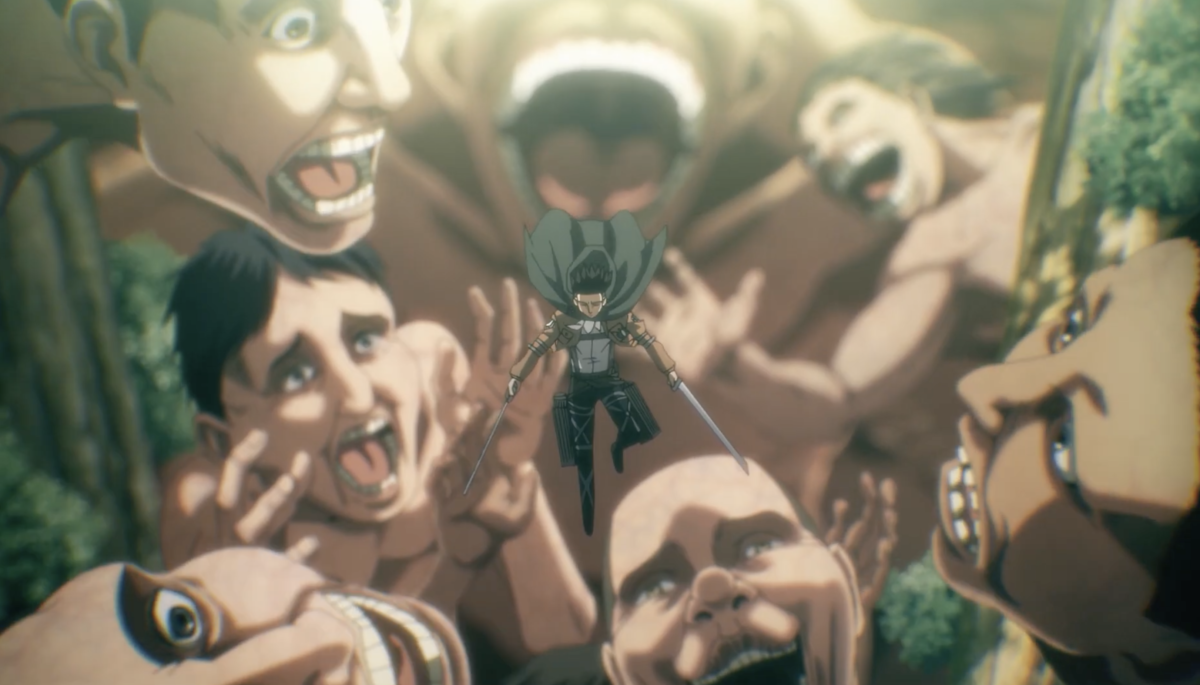
Eren begins as a symbol of rage and freedom. However, his transformation becomes increasingly unsettling. Ideals twist under pressure and revelation. His choices challenge audience loyalty and moral alignment. Consequently, the series forces viewers to question heroism itself. This bold shift defines the show’s narrative courage.
Moral Ambiguity Replaces Clear Villains
The series gradually dismantles the idea of absolute evil. Titans stop being monsters alone. Humans assume that role through decisions and systems. Every faction believes its actions are justified. Therefore, blame becomes fragmented and complex. This moral ambiguity elevates the storytelling significantly.
Political Themes Drive the Later Arcs
As the story expands, political conflict takes center stage. Power, propaganda, and nationalism shape outcomes. Leaders manipulate fear to maintain control. History becomes a weapon rather than a lesson. Thus, the narrative mirrors real-world conflicts with unsettling accuracy.
War Portrayed Without Glorification
Combat sequences avoid heroic exaggeration. Battles feel chaotic, cruel, and costly. Victory always comes with loss. Soldiers die abruptly and unceremoniously. Because of this, war feels meaningless rather than glorious. The series never romanticizes violence.
Animation That Matches Emotional Intensity
Animation quality supports narrative weight effectively. Early seasons deliver raw energy and kinetic motion. Later arcs emphasize controlled framing and atmosphere. Action remains impactful but restrained. Meanwhile, facial expressions convey internal conflict clearly. Visual execution consistently serves storytelling.
Sound Design and Music Amplify Impact
The soundtrack enhances tension and emotional gravity. Music often contrasts silence to emphasize dread. Vocal tracks add operatic weight to major moments. However, restraint remains a defining strength. Sound design never overwhelms narrative intent. Instead, it deepens immersion.
Pacing That Rewards Attention
The series demands patience and focus. Early mysteries unfold slowly but deliberately. Revelations recontextualize earlier events retroactively. Therefore, rewatch value remains extremely high. Nothing feels wasted or accidental. Every arc contributes meaningfully to the whole.
Themes of Freedom and Consequence
Freedom drives nearly every major decision. However, freedom always carries cost. Characters learn that liberation creates new chains. Choices ripple outward beyond intention. Consequently, the series questions whether true freedom exists at all. This philosophical depth sets it apart.
Symbolism Embedded Throughout the Story
Symbolism appears consistently but subtly. Walls represent fear and ignorance. Titans embody cycles of violence. Memory functions as both truth and burden. These symbols reinforce themes without heavy exposition. As a result, storytelling remains layered and intelligent.
Audience Division Strengthens Its Legacy
Not every viewer agrees with the series’ direction. Some reject its darker conclusions. Others praise its uncompromising honesty. This division reflects narrative risk-taking. The series refuses to please everyone. Instead, it commits fully to its vision.

Influence on Modern Anime Storytelling
Attack on Titan reshaped expectations for mainstream anime. Dark themes gained wider acceptance. Long-form storytelling became more ambitious. Moral complexity entered popular discourse. Therefore, its influence extends beyond its own genre.
Why the Ending Sparked Debate
The conclusion challenges emotional investment directly. It denies clean resolution and comfort. Consequences outweigh closure. This choice frustrates some audiences. However, it remains consistent with the series’ core philosophy. The ending prioritizes meaning over satisfaction.
A Series Built on Consistency and Risk
Despite tonal shifts, thematic consistency remains intact. Every arc builds toward inevitable conflict. Creative risks define the series’ identity. The story never retreats from uncomfortable truths. This commitment strengthens its narrative integrity.
Rewatch Value and Long-Term Impact
Rewatching reveals hidden foreshadowing and layered dialogue. Earlier scenes gain new meaning retroactively. Character motivations appear clearer. Therefore, the series rewards analytical viewers. Its depth increases with familiarity.
A Defining Work of Its Era
Attack on Titan stands as a landmark in modern anime history. It delivers uncompromising war storytelling with emotional honesty. The series challenges morality, heroism, and freedom relentlessly. While divisive, it remains unforgettable. Few anime redefine their medium so completely.


